



STORIES
Discover the authentic taste of Chalkidiki
The olive trees of Chalkidiki already played an important role in this unique landscape in ancient Greek times. The peninsula’s lime-rich soil, sunny hillsides, and gentle sea breezes provided the perfect environment for olive trees, so it is no surprise that olive cultivation quickly took root here. According to archaeological research, olive presses were already operating here in the 7th–6th centuries BC, demonstrating that olive oil was an early and defining part of local life.
By the Classical and Hellenistic periods, the oils of Chalkidiki were known far and wide. Ancient settlements of the region, such as Stageira, the birthplace of Aristotle, maintained lively trade, and their amphorae often reached as far as the Black Sea. Olive oil from this region was part of everyday nutrition and, thanks to its reliable and distinctive quality, easily found its place in many ports of the Aegean Sea.
During the Byzantine era, the monasteries of Mount Athos ensured the continuity of olive cultivation. For the monks, oil was not only a kitchen staple but also a medicinal and religious material, so they tended their groves with special care. During the Ottoman period, production continued, as supported by contemporary tax records.
In modern times, Chalkidiki takes pride in the exclusive Galano olive, distinguished by its particularly large fruit, high oil content, and elegant, fresh flavor profile. Due to its strong regional ties and exceptional quality, it was awarded PDO (Protected Designation of Origin) status in 2015, officially guaranteeing its origin and distinctive characteristics.
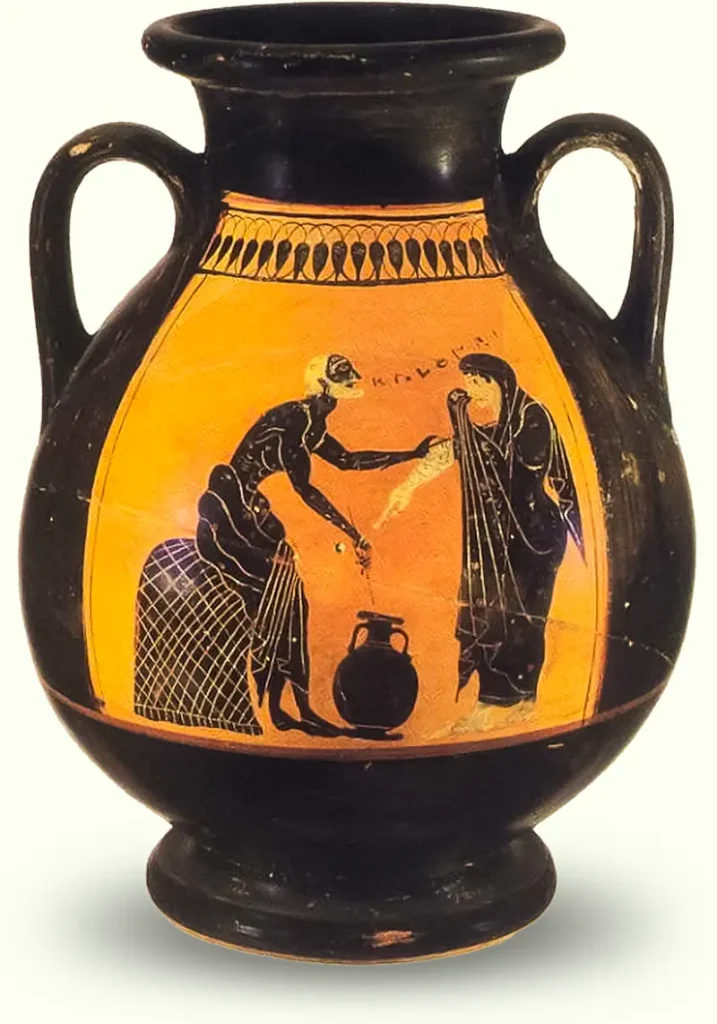
5th century BC Greek amphora depicting a scene of olive oil purchase.